


A player lands on a casino homepage from a Google search. They pause. Their mouse hovers over the registration button, but their eyes dart to the footer, scanning for licensing badges. They scroll to the FAQ, looking for withdrawal information. They check the chat icon to see if anyone’s actually there. This entire evaluation takes maybe fifteen seconds. By the end of it, they’ve already decided whether this site feels legitimate or whether they should hit the back button and try somewhere else.
The stakes in online gambling are uniquely high. Players deposit real money, upload sensitive identity documents, and trust that a website they’ve never used before will actually pay them when they win. Unlike ordering a product from an unfamiliar e-commerce site, where the worst-case scenario is a refund dispute, gambling involves continuous financial transactions and the psychological weight of chance. Every design choice and every sentence of copy either reinforces confidence or triggers a nagging sense that something might be off.
Platforms like pokie net have demonstrated that trust isn’t something you earn through a single banner claiming “100% Safe and Secure.” It accumulates through dozens of micro-decisions: how clearly payout terms are explained, whether support responds in two minutes or two days, whether the bonus conditions hide in size-eight font or sit in a readable table. Players notice when a site treats transparency as a liability rather than an asset.
This article examines the specific design patterns and content strategies that reduce player anxiety and build lasting trust. It’s not about manipulation or cosmetic reassurance. It’s about creating systems where clarity, honesty, and functional design work together so players can focus on playing instead of second-guessing whether they’ve made a mistake.
Trust Is a Product Feature, Not a Slogan
Most casino sites treat trust like a marketing problem. They add security badges to the footer, place “Licensed and Regulated” in the header, and assume the work is done. But players have learned to ignore these signals. They’ve seen too many sites that looked professional but delayed withdrawals for weeks or invented new verification requirements when someone actually won. Trust, in practice, is built through evidence that accumulates over time.
The difference between claims and proof matters. A claim says “We process withdrawals in 24 hours.” Proof shows a table of average processing times by payment method, explains what might cause delays, and links to a visible history of resolved complaints. A claim says “Your data is safe with us.” Proof explains which encryption standards are used, how documents are stored, and gives players actual control over account security settings like two-factor authentication.
When trust is treated as a feature, it gets engineered into the product itself. Withdrawal times become predictable because backend systems are designed for speed, not because marketing invented an optimistic number. Bonus terms become readable because the product team recognizes that confusion creates support tickets and chargebacks. Trust isn’t a feeling you create through copy; it’s a byproduct of systems that actually work the way they’re described.
First Impressions: The 10-Second Trust Scan
Players develop fast heuristics for evaluating unfamiliar gambling sites. These aren’t always rational, but they’re consistent. Within seconds of landing on a page, people make snap judgments based on visual hierarchy, the clarity of key information, and the presence or absence of red flags. A cluttered layout with flashing banners triggers the same mental alarm as a phishing site. Vague language around licensing makes people assume there’s something to hide.
The 10-second scan isn’t about reading every word. It’s pattern recognition. Players look for signals that suggest someone competent and accountable is running the operation. Here’s what that scan typically includes:
- Licensing information visible in the footer – not just a logo, but a license number and issuing authority that can be verified
- Clear navigation to policies, terms, and responsible gambling tools without having to hunt through three menu layers
- Professional design that doesn’t look like it was assembled from stock templates in 2008
- Consistent branding and language across pages, suggesting a real organization rather than a hastily assembled affiliate trap
- Contact information that includes live chat, email, and (ideally) a phone number, not just a contact form that disappears into a void
- Visible security indicators: HTTPS in the URL bar, recent copyright dates, working links
- Payment methods from recognizable providers, not just obscure cryptocurrency wallets
- Clear, jargon-free descriptions of how key processes work – registration, deposits, bonuses, withdrawals
- Absence of aggressive pop-ups, fake countdown timers, or other dark patterns that suggest desperation
- Evidence that the site is actively maintained: recent blog posts, updated game libraries, current promotional terms
These elements aren’t individually decisive, but together they create an impression. A site that gets most of them right passes the initial filter. One that fails several triggers immediate skepticism, and no amount of marketing language will overcome it.
Design That Calms Suspicion (Without Looking Like a Bank)

Trustworthy design doesn’t mean sterile or boring. It means intentional. Every layout choice either helps players find what they need or introduces friction. The goal isn’t to mimic corporate banking interfaces, which can feel cold and unwelcoming. The goal is to create an environment where nothing feels hidden, where navigation is predictable, and where important information is always within two clicks.
Typography matters more than most teams realize. Small, compressed text signals that a site doesn’t want you to read the terms. Adequate font size, clear line spacing, and readable contrast suggest the opposite: that the site expects you to read and understand what you’re agreeing to. Microcopy – the little bits of explanatory text near buttons and form fields – should answer obvious questions before they’re asked. “Processing time: 1-3 business days” next to a withdrawal button prevents anxiety. Its absence creates it.
Support visibility is another subtle trust signal. A chat icon that’s always accessible, with a realistic expectation of response time, shows that someone’s accountable. A contact form buried three pages deep suggests the site would prefer you didn’t reach out. Navigation should be obvious even to first-time visitors. If finding the terms and conditions requires detective work, players assume there’s a reason they’ve been obscured.
| Design Element | What It Signals | Common Mistake | Better Approach |
|---|---|---|---|
| Homepage hierarchy | What the site prioritizes | 60% flashing bonus banners, 5% actual information | Balance promotions with clear navigation to games, support, and policies |
| Footer content | Legitimacy and transparency | Tiny text, broken links, vague “regulated” claims | Readable licensing details, working links to all policies, clear contact options |
| Form fields | Respect for user data | Requesting excessive info upfront with no explanation | Only ask for what’s needed at each step; explain why you need it |
| Button copy | Honesty about next steps | “Claim Now!” without stating terms apply | “View Bonus Details” or “Deposit to Activate” |
| Loading states | System reliability | Vague spinners with no feedback | “Processing your deposit” or “Verifying account” with realistic time estimates |
Content That Reduces Doubt (Policies People Actually Understand)

Most casino terms and conditions are written to satisfy legal departments, not to communicate with players. The result is pages of dense text that no one reads and everyone resents. When a dispute arises, players claim they didn’t understand the rules. The site points to paragraph fourteen, subsection C. Everyone loses. Readable terms aren’t a courtesy; they’re a risk management strategy.
Plain English doesn’t mean dumbing down. It means organizing information logically and explaining complex processes in concrete steps. A withdrawal policy written in plain English says: “We process withdrawal requests within 24 hours. Bank transfers take 3-5 business days after that. E-wallets are usually instant once approved. Your first withdrawal requires ID verification, which takes up to 48 hours.” That’s useful. Compare it to: “Withdrawal processing times are subject to verification procedures and may vary depending on payment method and jurisdiction-specific compliance requirements.” That’s vague enough to excuse any delay.
Bonus terms are where trust breaks most often. Players see “100% match up to $500” and assume they deposit $500, get another $500, and can withdraw winnings freely. Then they discover a 35x wagering requirement, game restrictions, maximum bet limits, and an expiration date. They feel deceived, even if the full terms were technically available. The solution isn’t hiding the requirements; it’s making them impossible to miss. A simple table showing contribution rates by game type and worked examples of how wagering requirements function prevents most disputes before they start.
Every trustworthy casino site should include these content sections, written in language that assumes the reader is intelligent but unfamiliar with industry jargon:
- How verification works – what documents you’ll need, how long it takes, why it’s required
- Deposit methods and fees – which options are instant, which have fees, minimum and maximum amounts
- Withdrawal process step-by-step – how to request, approval timeline, payment method differences, first-time vs. returning player processes
- Bonus terms with examples – contribution rates by game, how wagering is calculated, what happens if you withdraw early
- Responsible gambling tools – how to set limits, how self-exclusion works, links to external support organizations
- Account security guidance – enabling two-factor authentication, recognizing phishing attempts, secure password practices
- Privacy policy in sections – what data is collected, why, who it’s shared with, how to request deletion
- Complaint and dispute process – internal escalation steps, timeframes, external arbitration options
Fairness Signals: RTP, Game Rules, and Independent Testing (Plain English)
Return to Player percentages mystify most casual players. They see “96.5% RTP” and don’t know whether that’s good, bad, or meaningless. Transparent casinos explain it simply: over millions of spins, the game returns an average of 96.5% of all bets to players. The house keeps 3.5%. This doesn’t predict what happens in any individual session – variance is huge in the short term – but it indicates the game’s long-term edge. Showing RTP for every game demonstrates confidence in the math.
Independent testing is another concept that sounds important but remains vague for most people. Seals from organizations like eCOGRA appear in footers, but what do they actually verify? In straightforward terms, independent labs test random number generators to confirm they’re unpredictable and that game outcomes match the stated probabilities. They also audit payout percentages to verify that advertised RTP figures are accurate. This testing happens periodically, and certificates can be verified. Transparency means linking to current certificates and explaining what they cover, not just displaying a logo and hoping it reassures people.
Some jurisdictions require detailed fairness reporting. The UK Gambling Commission, for instance, mandates that operators publish information about game RTPs and testing procedures. Public-facing guidance from the Commission helps players understand what standards licensed operators must meet. Sites operating in these markets benefit from explaining compliance in clear terms rather than treating regulation as a checkbox exercise.
Money Trust: Deposits Are Easy, Withdrawals Make or Break Reputation
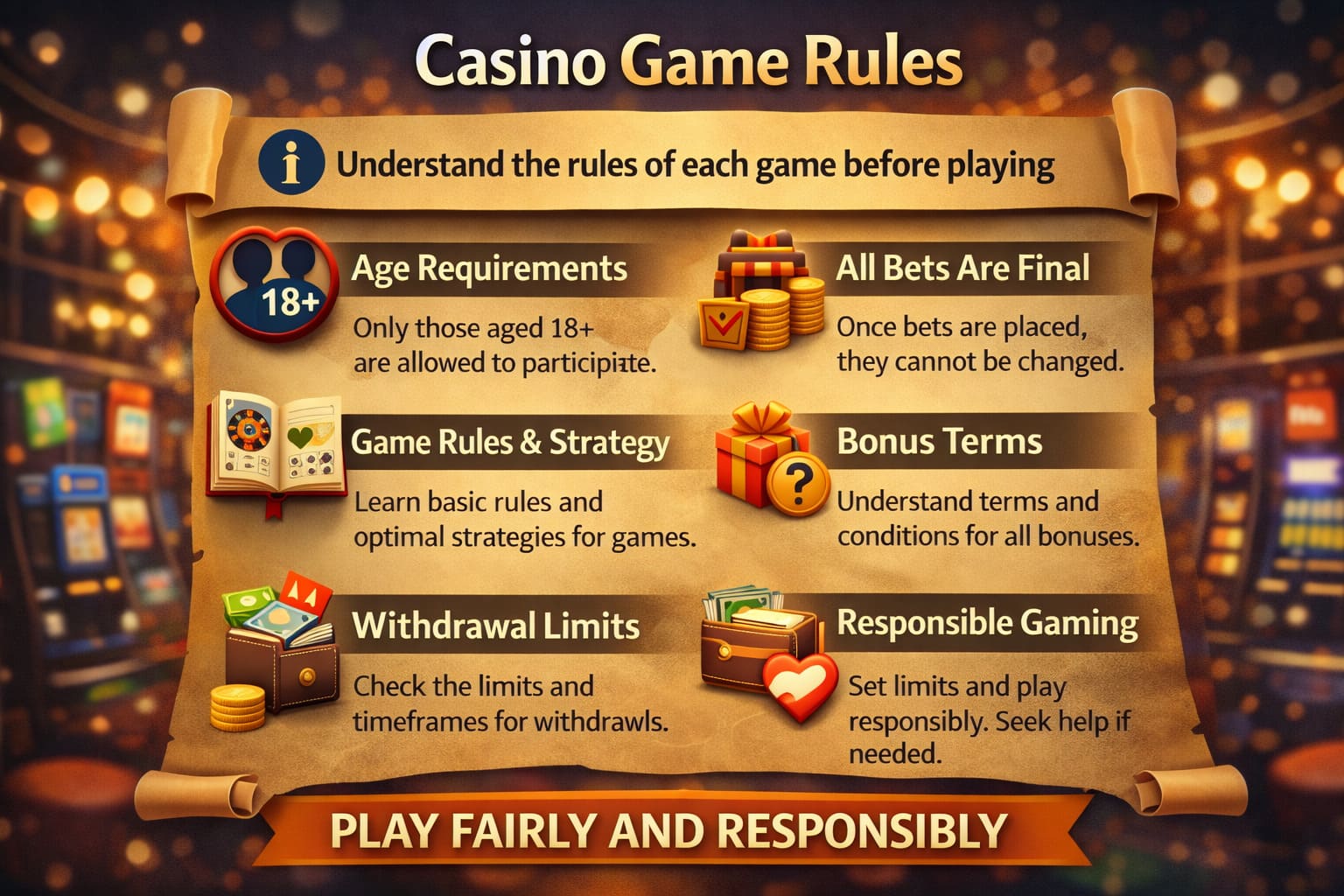
Every casino makes depositing as frictionless as possible. One click, funds appear instantly, you’re playing within seconds. This is the easy part. Withdrawals are where reputations are built or destroyed. Delays, unexpected verification requests, and vague processing times turn even legitimate operations into objects of suspicion. Players tolerate slow withdrawals if they’re warned upfront. They revolt when a “24-hour payout” turns into a week with no explanation.
The most common source of withdrawal frustration isn’t malice; it’s poor communication. A payment gets held up in a compliance check, but the player just sees “pending” with no context. They assume the worst: the site is stalling, inventing reasons to avoid paying, or hoping they’ll reverse the withdrawal and lose the money back. A simple status update – “Your withdrawal is in final review; expected completion by Tuesday” – prevents most of this anxiety.
Hidden conditions destroy trust faster than almost anything else. A player meets the wagering requirements, requests a withdrawal, and suddenly learns there’s a maximum cashout on bonus winnings, or that certain games didn’t count toward the requirement, or that their account needs additional verification documents. If these conditions existed all along but weren’t clearly stated upfront, the player feels scammed. They’re not wrong.
| Withdrawal Detail | What Players Fear | What Transparent Wording Looks Like |
|---|---|---|
| Processing time | Indefinite delay with no updates | “Approved within 24 hours. Bank transfers: 3-5 days. E-wallets: instant after approval.” |
| Verification requirements | New documents requested at withdrawal time | “First withdrawal requires ID and proof of address. Upload now to avoid delays later.” |
| Minimum withdrawal | Trapped funds below threshold | “Minimum withdrawal: $20. No maximum for verified accounts.” |
| Withdrawal fees | Unexpected deductions | “No fees on e-wallet withdrawals. Bank wire: $25 fee for amounts under $500.” |
| Bonus impact | Winning capped without warning | “Maximum cashout from this bonus: $500. Winnings above this are removed at withdrawal.” |
Security and Privacy Messaging That Doesn’t Sound Like Marketing
Generic security claims are background noise. “Your data is safe with us” and “We use advanced encryption” tell players nothing useful. Specific details build confidence. HTTPS encryption is table stakes – the little padlock in the browser bar. Beyond that, transparent sites explain what happens to uploaded documents. Are they stored indefinitely? Encrypted at rest? Accessible to customer service reps or locked down to a compliance team?
Two-factor authentication should be offered and explained without jargon. “Add an extra layer of security by requiring a code from your phone whenever you log in” is clearer than “Enable 2FA for enhanced account protection.” Password requirements should be reasonable and explained: “At least 8 characters with a mix of letters and numbers” is fine. Requiring special characters and monthly resets just frustrates people into using password managers or writing credentials down.
Privacy policies are legally required but rarely useful. Most are copy-pasted templates that players never read. A better approach: a short summary at the top in bullet points, followed by the detailed legal text. The summary explains what data is collected (name, email, payment info, gameplay history), why it’s needed (compliance, fraud prevention, service improvement), and who it’s shared with (payment processors, regulators, never sold to third parties). This takes three paragraphs and builds more trust than ten pages of legalese.
Cookie consent banners are everywhere now, and most are hostile by design – tiny print, pre-checked boxes, no real choice. A respectful approach offers a clear yes/no option, explains what different cookie types do (essential, analytics, advertising), and doesn’t hide the “reject all” button. Players notice when a site treats privacy regulations as an obstacle to work around rather than a reasonable expectation.
Responsible Gambling UX That Feels Real (Not Performative)
Responsible gambling features exist on most licensed casino sites, but they’re often buried or presented in a way that suggests legal compliance theater rather than genuine concern. A “Play Responsibly” link in eight-point font at the bottom of the page, leading to a wall of text, doesn’t help anyone. Tools that are easy to find and simple to use signal that a site views responsible gambling as part of the product, not an unfortunate regulatory requirement.
Deposit limits should be available during registration and easily adjustable afterward. The interface for setting them should be straightforward: daily, weekly, and monthly options with immediate confirmation. Reality checks – periodic pop-ups showing how long you’ve been playing and how much you’ve spent – work best when they’re mandatory rather than optional. Players in the middle of a losing streak rarely activate safeguards voluntarily; having them enabled by default protects both the player and the operator from longer-term problems.
Self-exclusion is the most serious responsible gambling tool, and it needs to be treated that way. The process should be simple but not instantaneous – a short cooling-off period allows people to make the decision deliberately. Once activated, it should be genuinely irreversible for the stated period. Sites that allow excluded players to reactivate accounts by contacting support undermine the entire mechanism. Real responsible gambling tools create short-term friction in exchange for long-term trust and fewer problem gambling complaints.
Links to external support organizations should be visible and specific. “If you need help, visit GamCare or BeGambleAware” with actual links is more useful than generic text about seeking professional help. The message should be empathetic without being preachy. “Gambling should be entertainment. If it’s causing problems, help is available” is better than lecturing about risk.
Social Proof Without Manipulation
Player reviews, ratings, and testimonials carry weight because they come from sources outside the casino’s control. Or at least they should. Fake reviews are easy to spot – five-star ratings with generic praise and identical phrasing – and they damage credibility faster than having no reviews at all. Authentic social proof includes negative feedback. A site with a 4.2-star average and some visible complaints about slow support or confusing bonus terms is more believable than one claiming unanimous perfection.
Third-party review platforms and forums matter. Players check Trustpilot, Reddit, and gambling-specific review sites before depositing significant amounts. Casinos can’t control what gets said in these spaces, but they can respond professionally to complaints and demonstrate that issues get resolved. Ignoring criticism or posting defensive replies makes everything worse. Acknowledging problems and explaining fixes shows accountability.
Promotional honesty is part of social proof. A site that advertises “Instant withdrawals!” but delivers them in three days loses credibility permanently. Better to promise “Most e-wallet withdrawals processed same day” and occasionally exceed expectations than to overpromise and disappoint. Fake urgency – “Only 3 spots left!” on a bonus with unlimited availability – trains players to distrust everything else on the site. Players notice when systems designed to create FOMO feel manipulative, and they adjust their trust accordingly.
A Practical Trust-Building Playbook (Design + Content)
For teams looking to systematically improve trust signals, the following actions can be implemented within 30 days without requiring major platform rewrites. These changes address the most common friction points and visibility gaps that cause players to question legitimacy:
- Audit every policy page for readability. Run terms and conditions through a readability checker. If they score above 12th-grade reading level, rewrite them in shorter sentences with clear examples.
- Create a withdrawal FAQ with specific timelines. List every payment method with realistic processing windows and explain what factors cause delays.
- Make bonus terms impossible to miss. Add a summary table above the claim button showing wagering requirements, game contributions, and max cashout in plain numbers.
- Add status updates to withdrawal screens. Replace “Pending” with actual information: “In compliance review,” “Approved, awaiting payment processor,” “Completed.”
- Feature licensing details prominently in the footer. Include license number, issuing authority, and a link to the regulator’s verification page.
- Enable two-factor authentication and promote it. Add a one-time prompt after registration explaining what 2FA does and offering setup in three clicks.
- Display RTPs for all games. Add a simple info icon next to each game showing its RTP percentage and a one-sentence explanation of what that means.
- Make support response times visible. If live chat averages five-minute responses, say so. If email takes 24 hours, set that expectation upfront.
- Review all microcopy for clarity. Every button, form field, and tooltip should answer “What happens next?” without requiring users to guess.
- Add a transparent complaints process. Create a dedicated page explaining how disputes are handled, typical resolution times, and escalation to external mediators if needed.
- Test the mobile experience for trust signals. Licensing information, contact options, and policy links should be just as accessible on mobile as desktop.
- Conduct a monthly broken link audit. Dead links in the footer or policy pages signal neglect and erode confidence that anyone’s maintaining the site.
Where Trust Breaks: Common Mistakes That Look Small But Cost Big
Dark patterns are UI choices designed to trick users into actions they wouldn’t take if the interface were honest. In gambling, these include pre-checked boxes for marketing emails during registration, buttons labeled “Maybe Later” instead of “No Thanks” for bonuses, or withdrawal buttons that are smaller and less visible than deposit buttons. Each instance might seem minor, but collectively they signal that the site values manipulation over respect. Players notice, even if they can’t articulate exactly what bothers them.
Hidden terms are the classic trust destroyer. A player reads the promotional email, sees “100% Match Bonus,” and deposits. Only after claiming do they discover the bonus can’t be used on their preferred games, has a 60x wagering requirement, or expires in 48 hours. The site technically disclosed everything, but it was buried in paragraph seven of the terms. This is worse than having no bonus at all, because it creates active resentment rather than neutral indifference.
Confusing bonus UX happens when the mechanics of activating, tracking, and clearing bonuses require an advanced degree. A player deposits, the bonus doesn’t activate automatically, and they don’t know whether to contact support or check a settings page. Then they win but can’t withdraw because of progress they can’t track toward requirements they didn’t fully understand. Simplifying this system – or making participation entirely optional with no pressure – prevents most disputes.
Support dead-ends feel like deliberate avoidance. A player sends an email and gets an auto-reply promising a response within 24 hours. Three days pass with nothing. They try live chat, wait fifteen minutes, and get disconnected without ever reaching an agent. They check for a phone number and find none. At this point, even if the site is legitimate, the player assumes the worst. Responsive support isn’t just good service; it’s structural trust infrastructure. Sites like the pokies net login demonstrate that accessible support channels reduce anxiety even when players don’t need to use them – just knowing help is available if required builds confidence in the overall operation.
Inconsistent policy pages create confusion that looks like deception. The FAQ says one thing about verification documents, the terms and conditions say something slightly different, and a support agent gives a third answer. This usually happens through neglect rather than malice – policies change, and not all pages get updated – but the effect is the same. Players don’t know what’s true, so they assume the version that’s most convenient for the casino and most restrictive for them.
Conclusion
Trust in online gambling isn’t built through slogans, security badges, or promises of safety. It’s built through consistency between what a site claims and what it actually does. Players evaluate dozens of micro-signals during their first visit and throughout their experience: how clearly policies are written, how quickly withdrawals process, how honestly bonuses are presented, whether support responds when needed. Each interaction either reinforces confidence or chips away at it.
The practical reality is that trust reduces friction. Players who trust a site deposit more, play longer, and generate fewer support tickets. They don’t reverse withdrawals out of panic or file chargebacks because they feel deceived. They recommend the site to others instead of warning people away. Trust isn’t a soft metric that’s nice to have; it’s a measurable business advantage that shows up in retention rates and customer lifetime value.
Building trust means treating transparency as a feature, clarity as a competitive advantage, and every policy page as an opportunity to demonstrate that someone accountable is running this operation.